Sea Change
Curated by Dr Edward Christie,
Green Gallery-University of Dundee Botanic Gardens
2026
Since time immemorial, humans have related intimately to the sea. In The Sea Around Us , marine biologist Rachel Carson suggests this connection derives from our deepest origins, tracing the evolution of humans from simple microorganisms which first appeared in the ancient oceans billions of years ago. Mirroring this profound transformation, the sea is often invoked as a metaphor to refer to a fundamental shift in consciousness and experience. This usage can be traced back to William Shakespeare, who coined the idiomatic expression ‘sea change’ in The Tempest to evoke the rift between life and death, through which our biological matter is recycled into the planetary ecosystem.
Since then, images of liquidity and flux have frequently resurfaced to express the socio-economic, religious, and environmental upheavals which have defined the modern era. Karl Marx and Friedrich Engels argued that, in modern capitalist society, ‘all that is solid melts into air’, as familiar ways of living are constantly unsettled by the perpetual drive for economic growth. More recently, Zygmunt Bauman has claimed that our globalised world is one of ‘liquid modernity’, in which individuals enjoy greater freedom while navigating increasingly fragile social bonds and growing uncertainty.
Conversely, decolonial theorists from Édouard Glissant to Christina Sharpe have drawn on maritime imagery to reflect on the enduring violences of empire – through which both human lives and the natural world were rendered fungible commodities – while also exploring the forms of relation,cultural transformation, and networks of care that emerged in its wake.
Meanwhile, the turbulence of the Earth’s oceanic system has become emblematic of the destructive impacts of humanity’s mass combustion of fossil fuels, which is driving global heating at ever faster rates. According to the Met Office, global sea levels have increased around twenty centimetres since 1901, and their absorption of excess carbon dioxide from our atmosphere is causing them to become increasingly acidic, threatening the survival of marine life. While legislative changes and technological innovation may offer partial solutions to some of these problems, there is a growing recognition that effectively responding to climate change fundamentally requires the creation and widespread adoption of new ways of living in relation to the complex human and non-human worlds of which each of us is a part.
This exhibition invites reflection on these surging conditions. Rather than treating the sea as timeless and passive, it foregrounds its rich entanglements with our complex pasts, lived realities, and imagined futures.
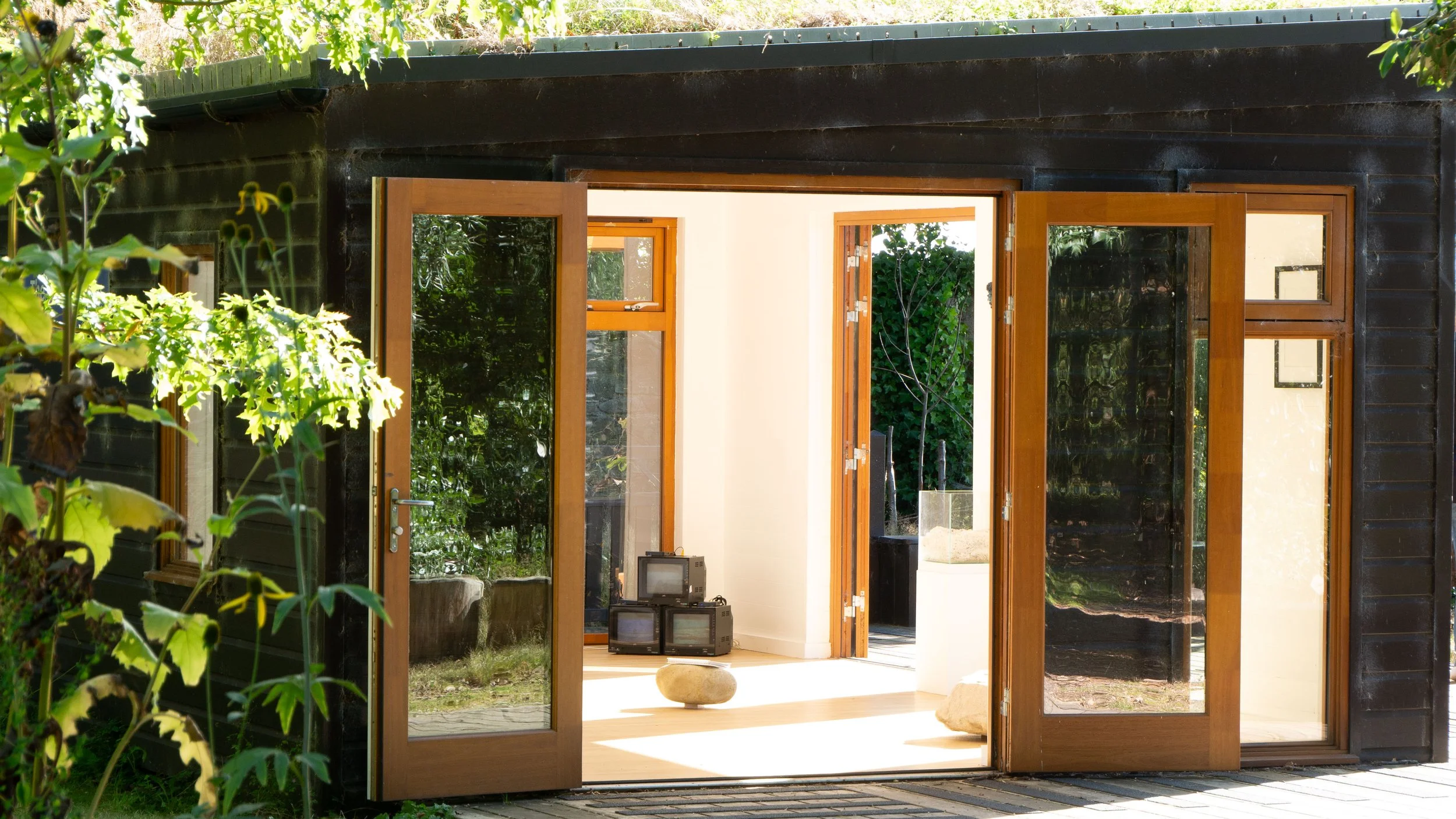
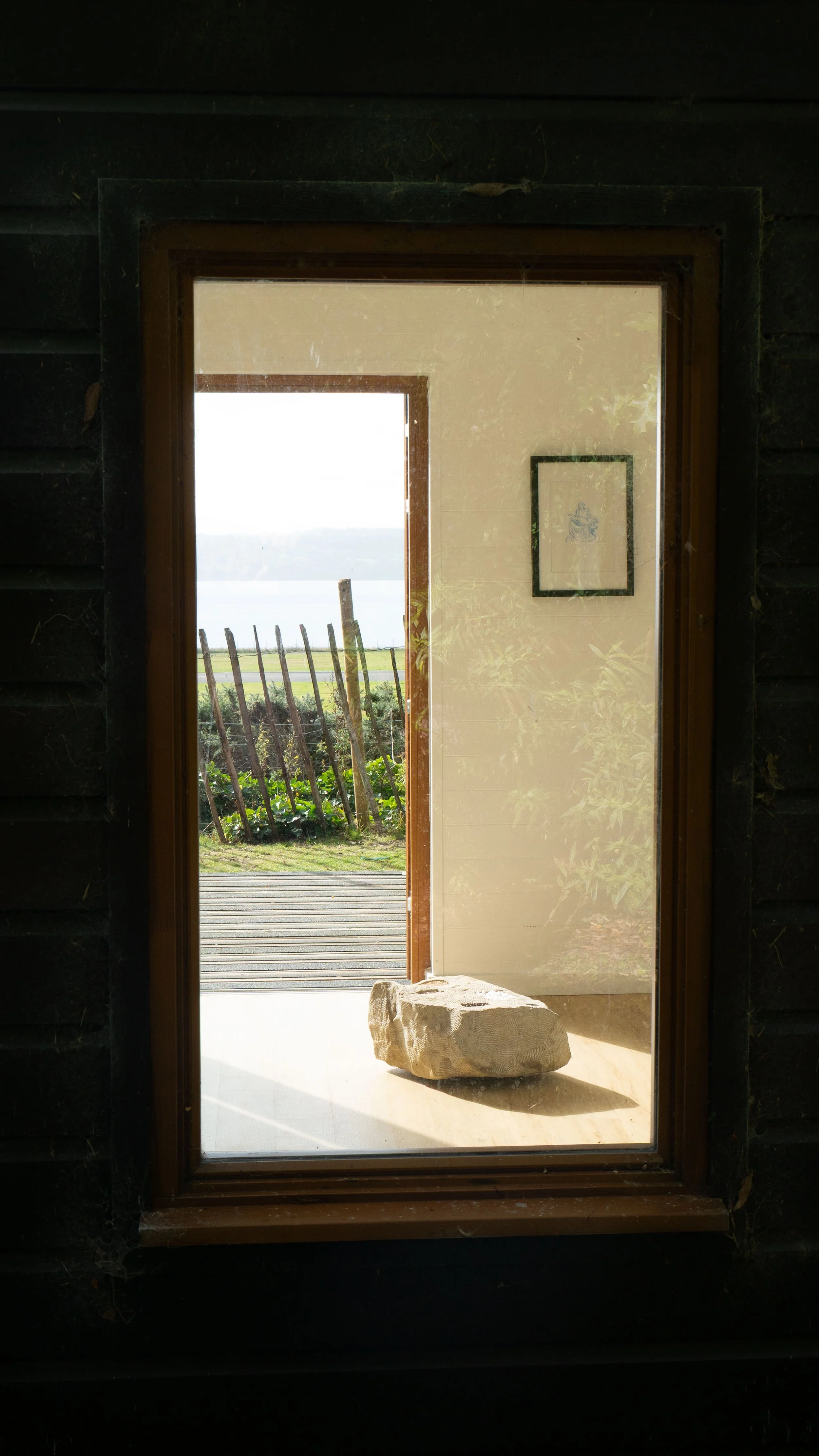
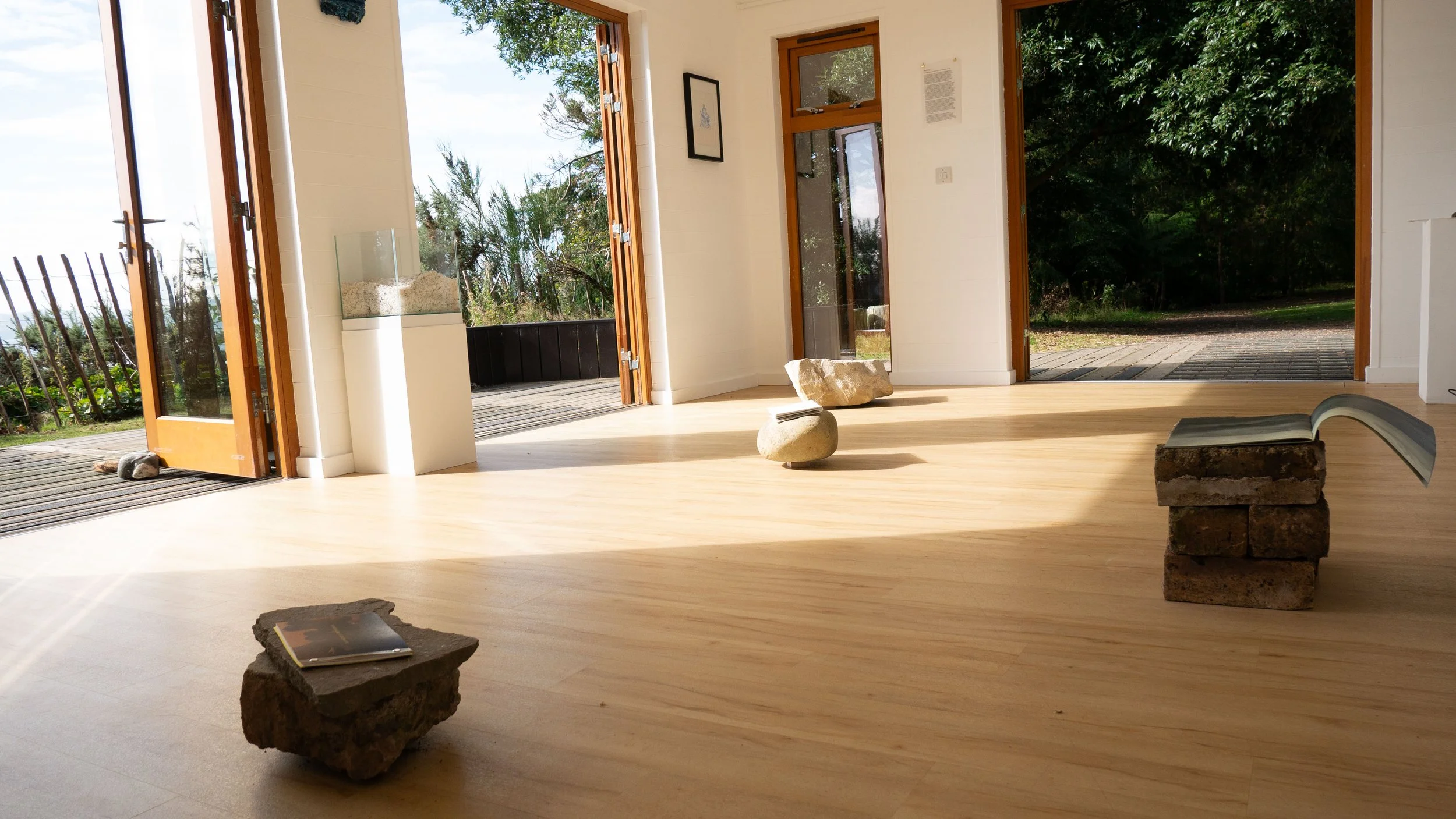
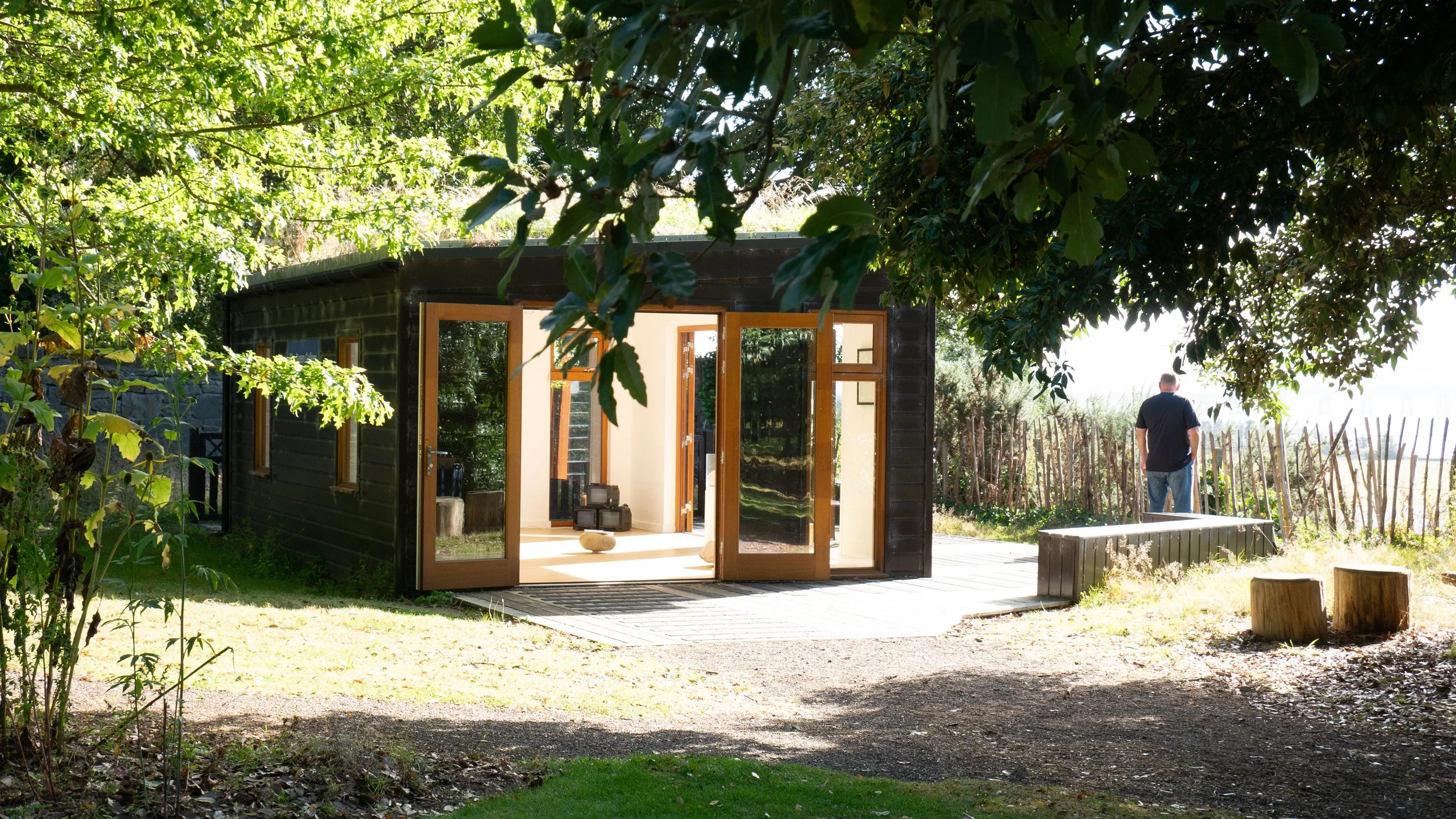
The display brings together works by four artists – Désirée Coral, Killian Dunne, Edward Christie, and Marie-Chantal Hamrock – and responds directly to the Green Gallery’s unique setting, with its sweeping views along the River Tay as it flows inwards from the North Sea.
Text by Dr Edward Christie
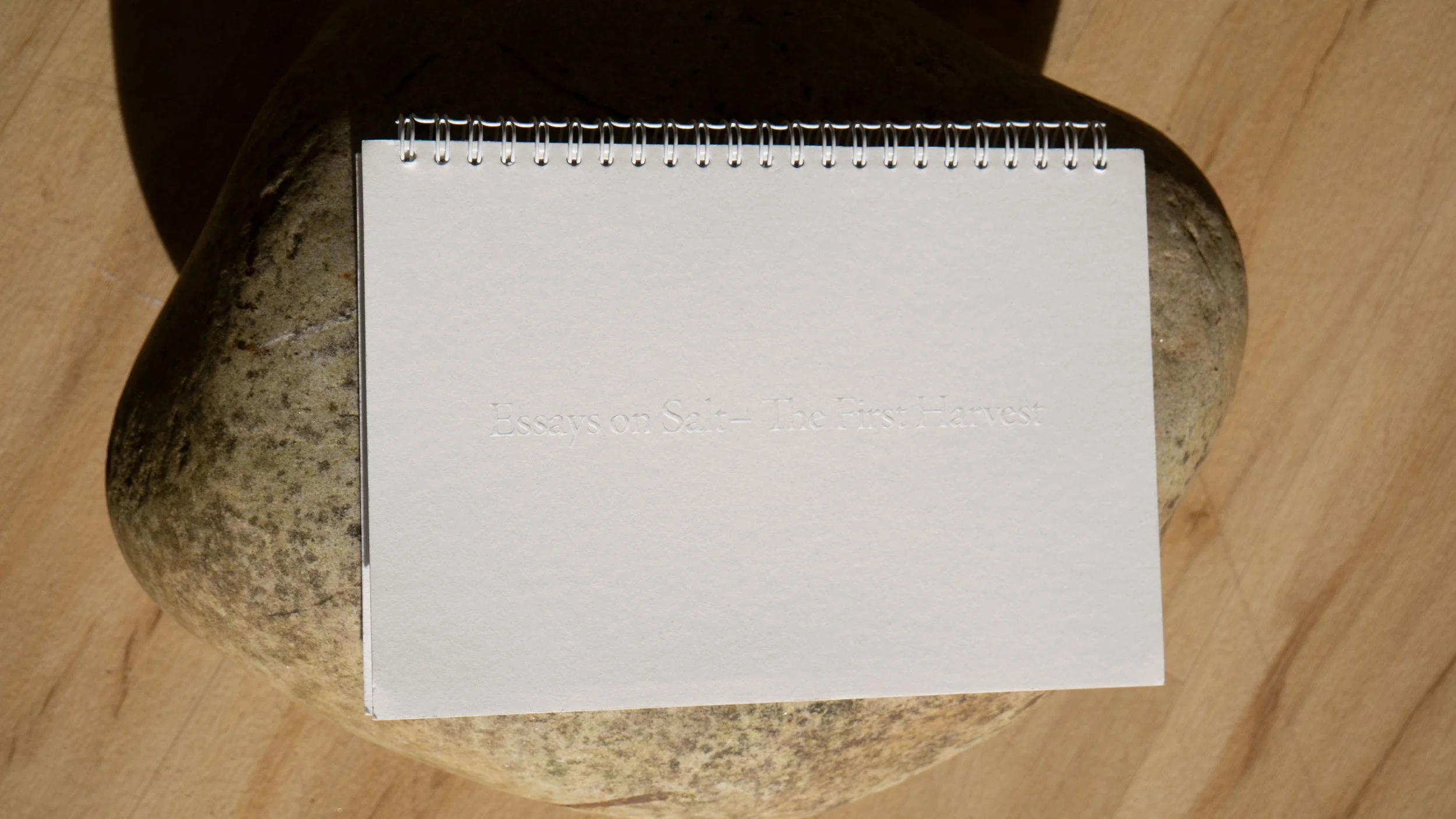
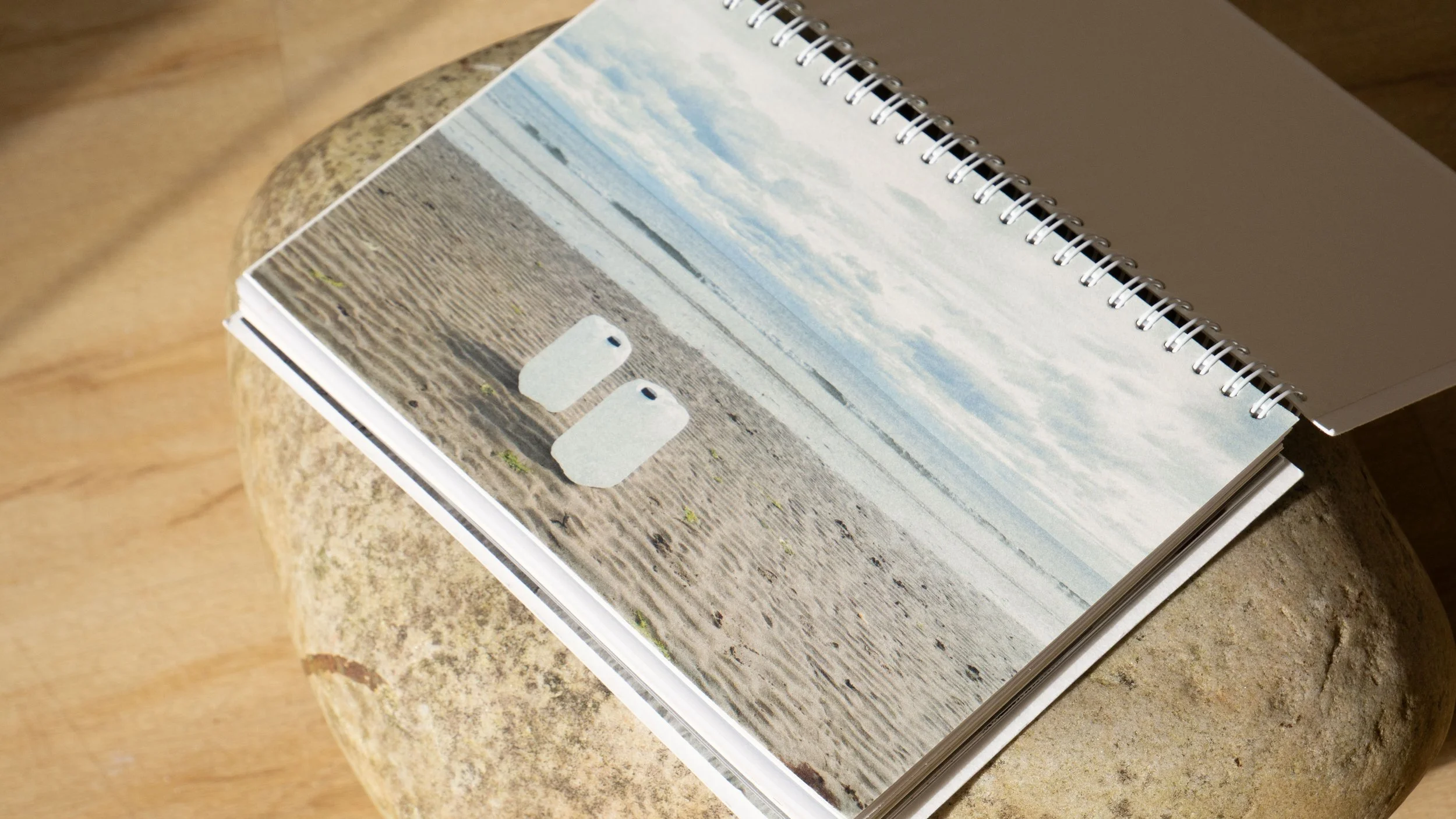
Included in this exhibition are three works related to Coral´s ongoing research project, Essays on Salt:
-
Video Installation
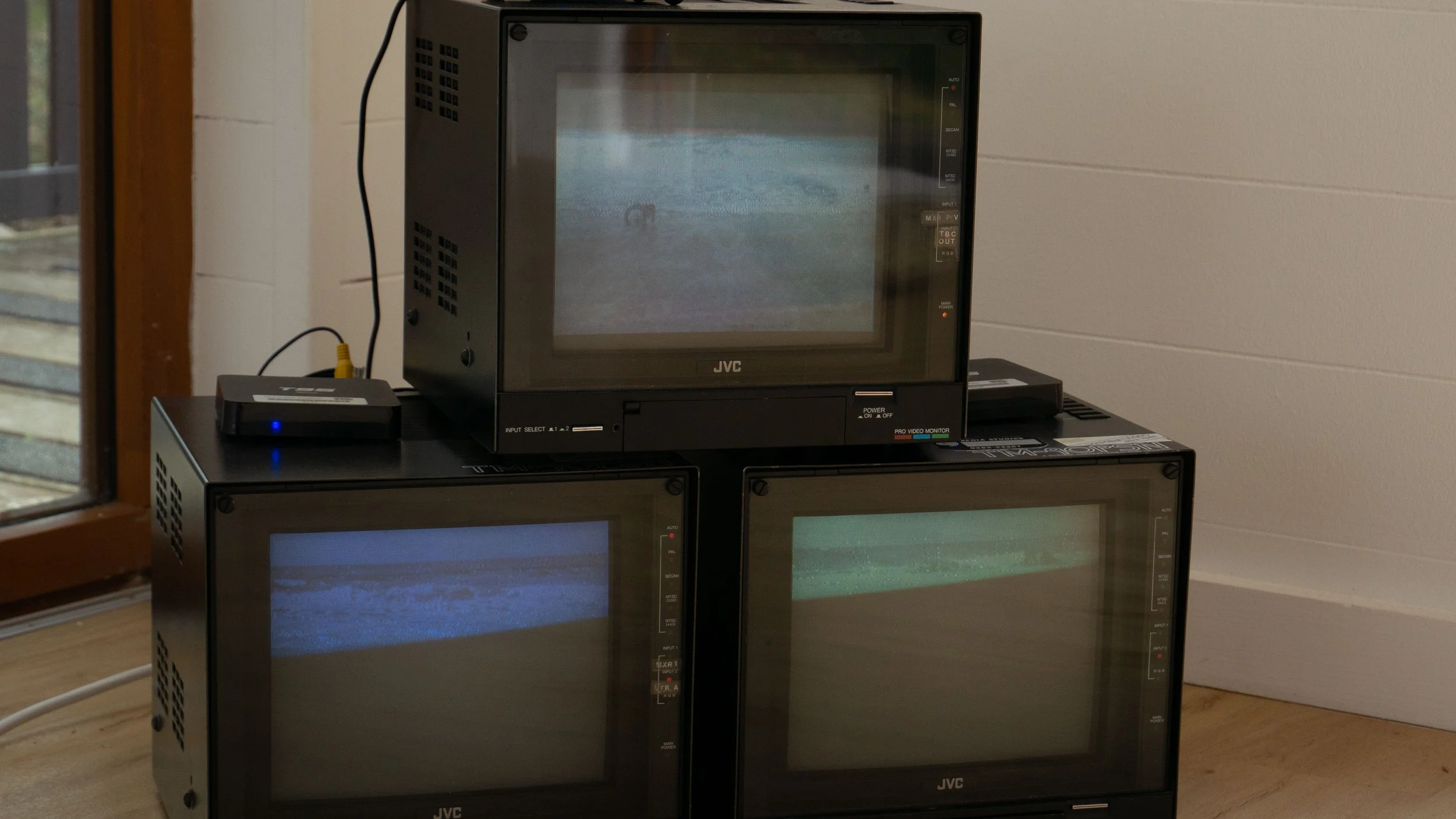
Video installation, Essays on Salt – The First Harvest documents the artist collecting seawater in St Andrews East Sands beach, which was then left to evaporate for several weeks at St Andrews Botanic Garden. She then transported the salt to Aberdeen—a durational performance which echoed pre-industrial modes of salt production and distribution in Scotland. The work is presented across three CRT colour monitors that are arranged like the cuboid structures formed by salt crystals.
-
Evaporation/Crystallisation
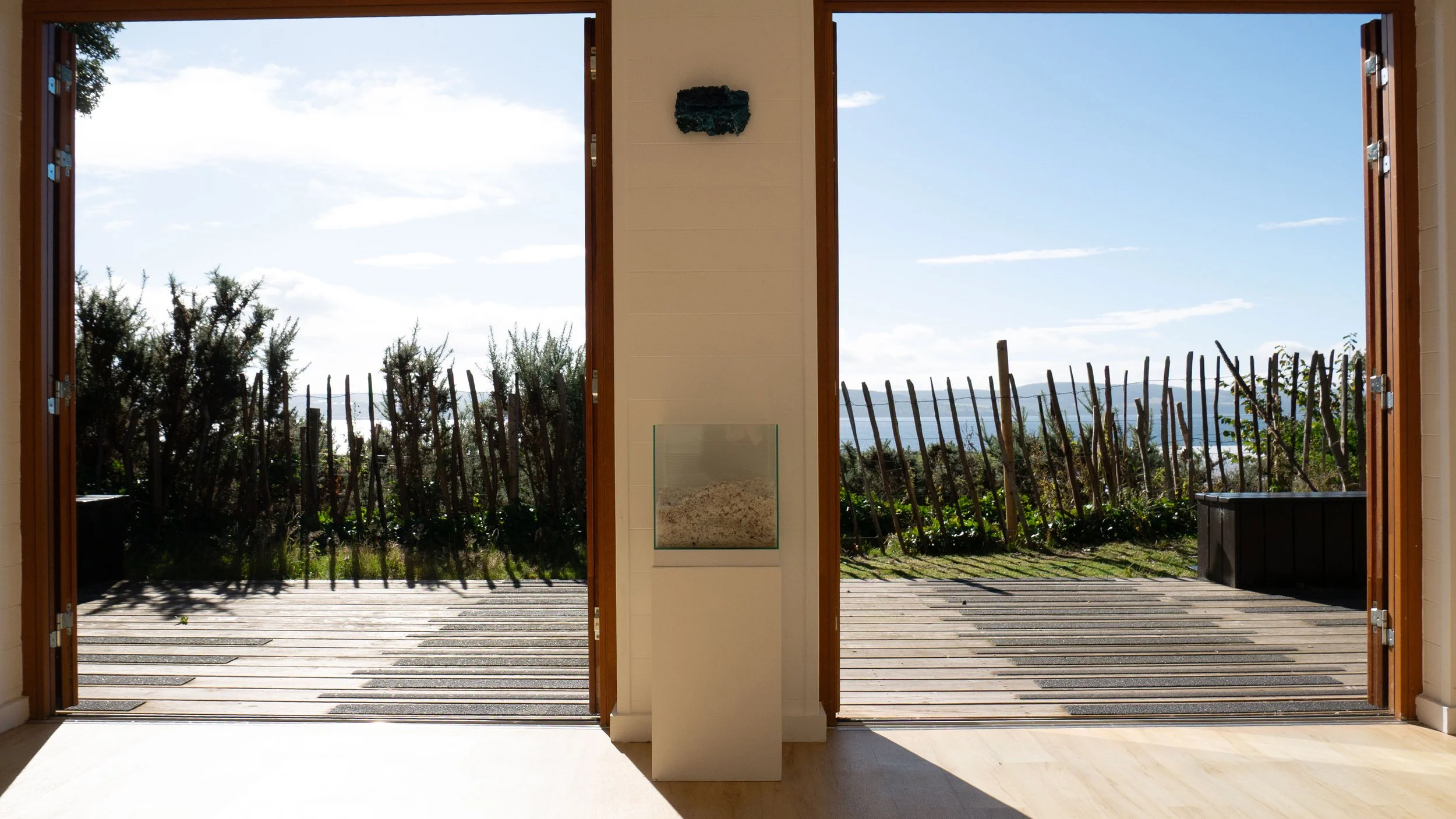
Evaporation/Crystallisation Cube – Conversion to Freedom is comprised of a glass box containing the gathered salt. The work refers to Hans Haacke's Condensation Cube (1963), in which a sealed acrylic cube was filled with water to reveal hidden environmental interactions and cycles. By contrast, Coral’s cube is open, which allows the water to evaporate and the salt to dry and form crystals.
-
Untitled Rock #1
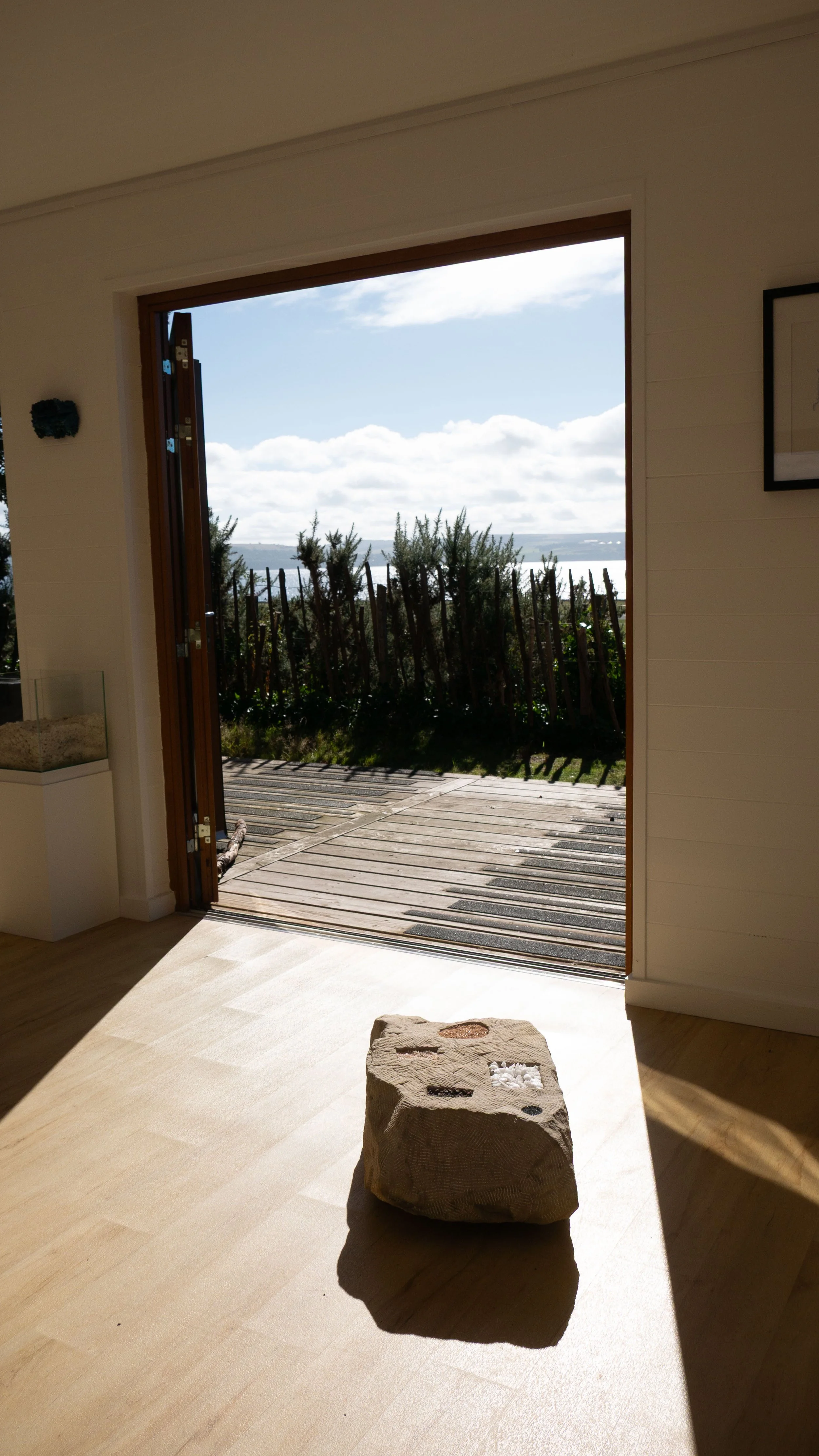
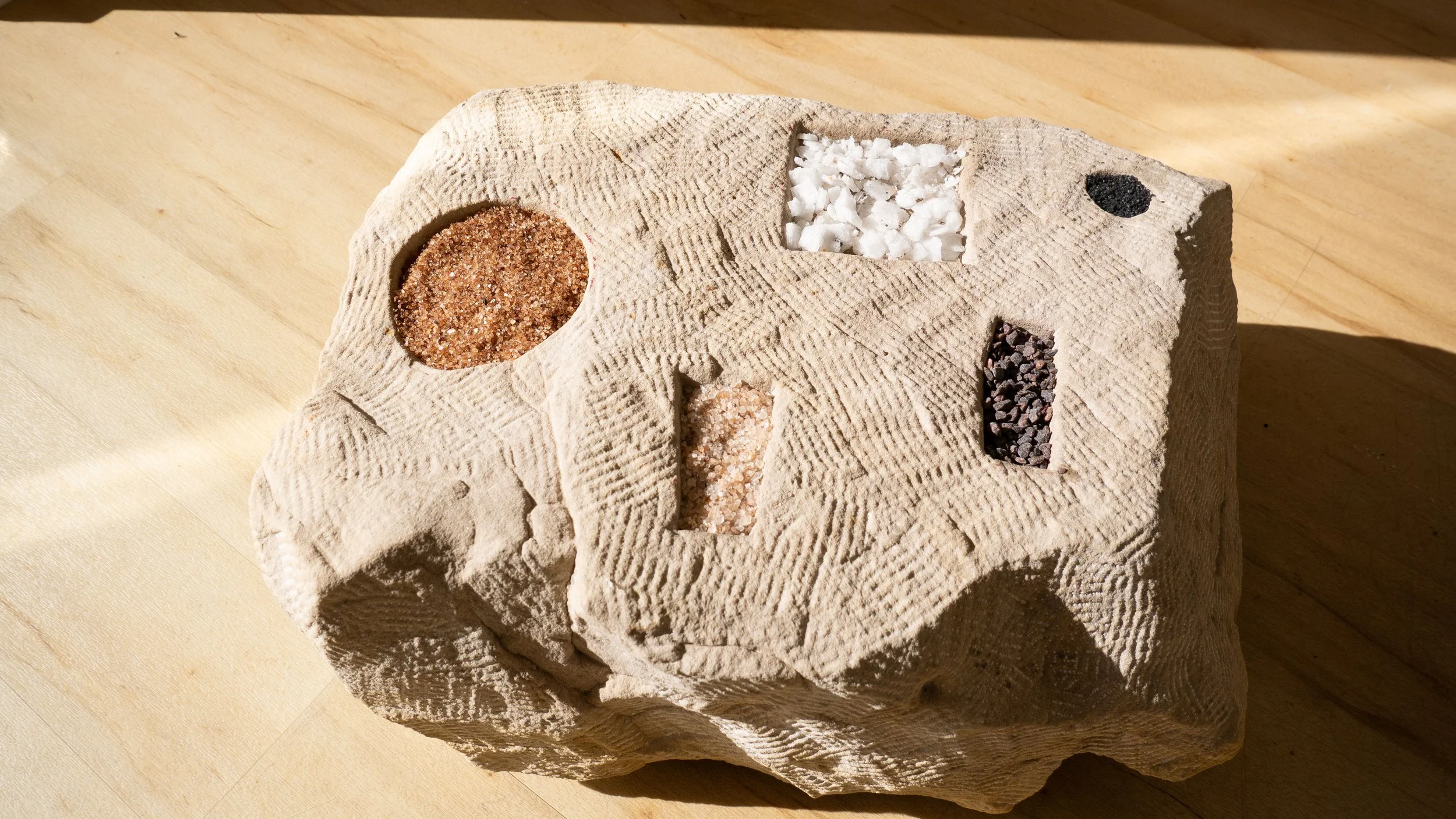
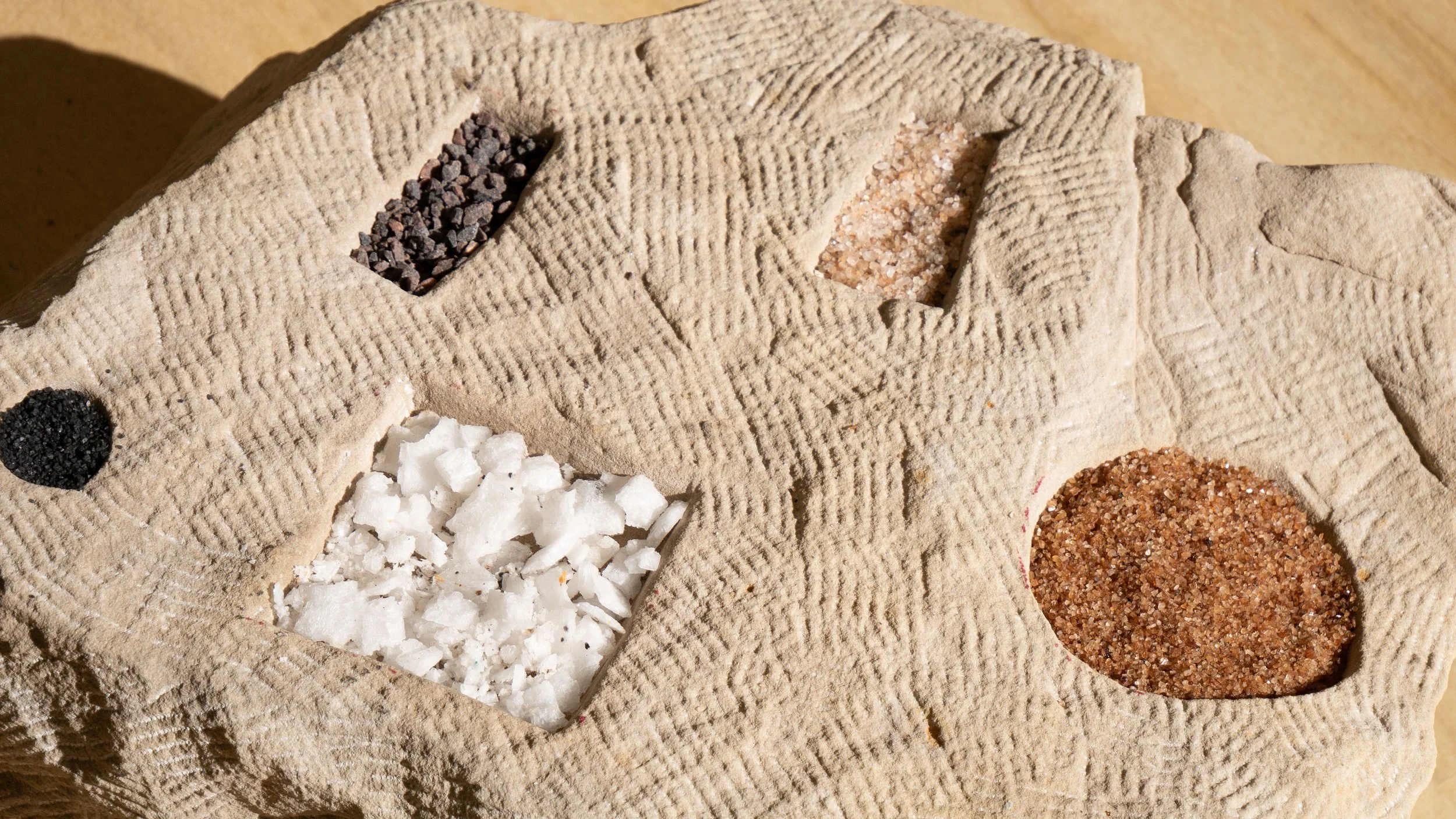
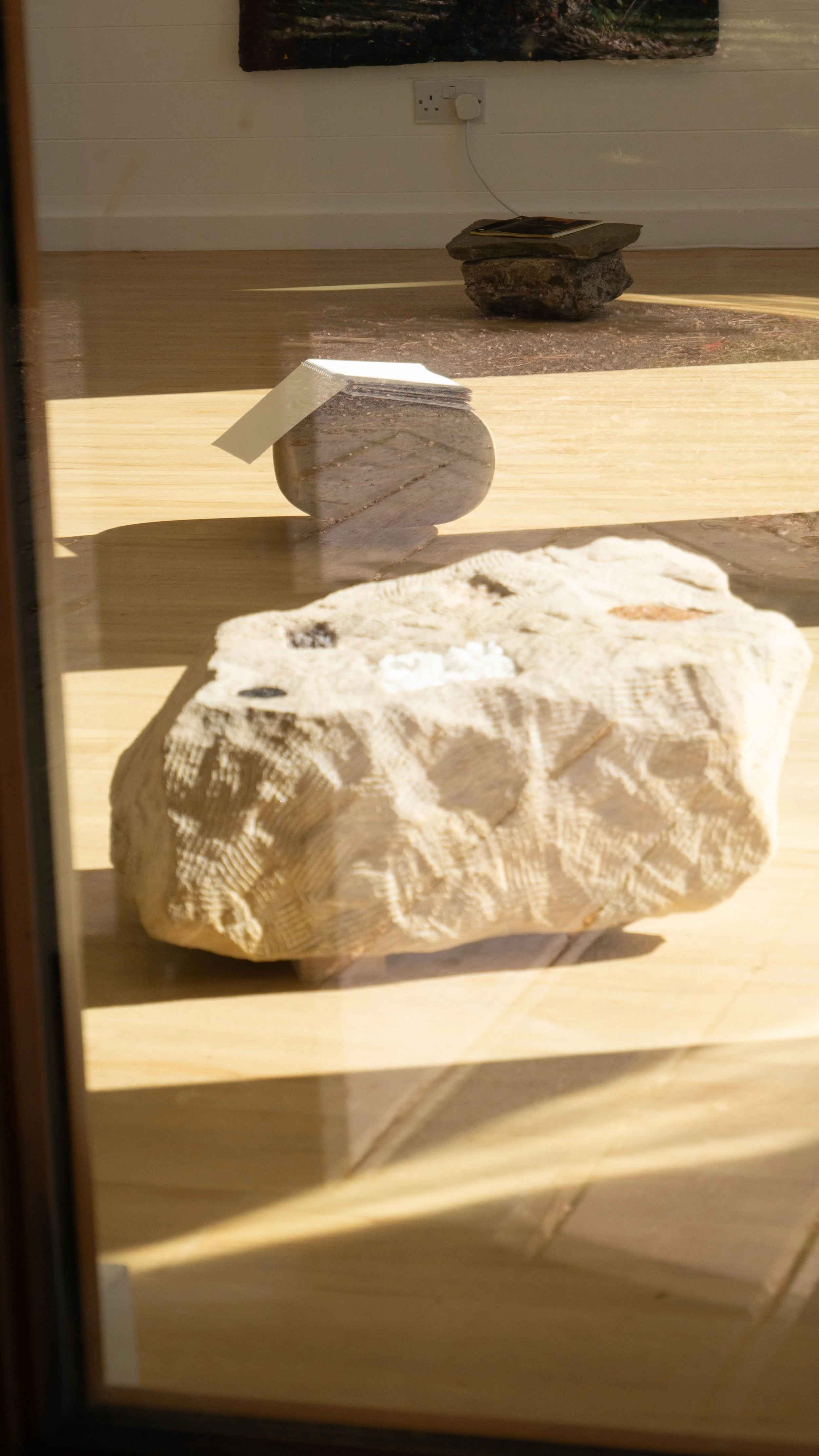
On the other side of the gallery, Untitled Rock #1 is carved in Dundonian sandstone, with recesses that evoke the dug structures of archaeological sites.
Each cavity contains a different kind of salt: sea salt harvested by the artist (as shown in the video, opposite), Altaussee Austrian rock salt, kalanamak (Indian black salt), Hawaiian black salt, and smoked brown Austrian salt. Brought together, these variants prompt a comparative reflection on how salt’s extraction and production has differed across time and space.
In this way, the work decentres the industrial model of salt production which rose to prominence to support the geopolitical ambitions of the British Empire and remains predominant today.