2025-2026
Essays on Salt-The First Harvest
How many steps to the shore?
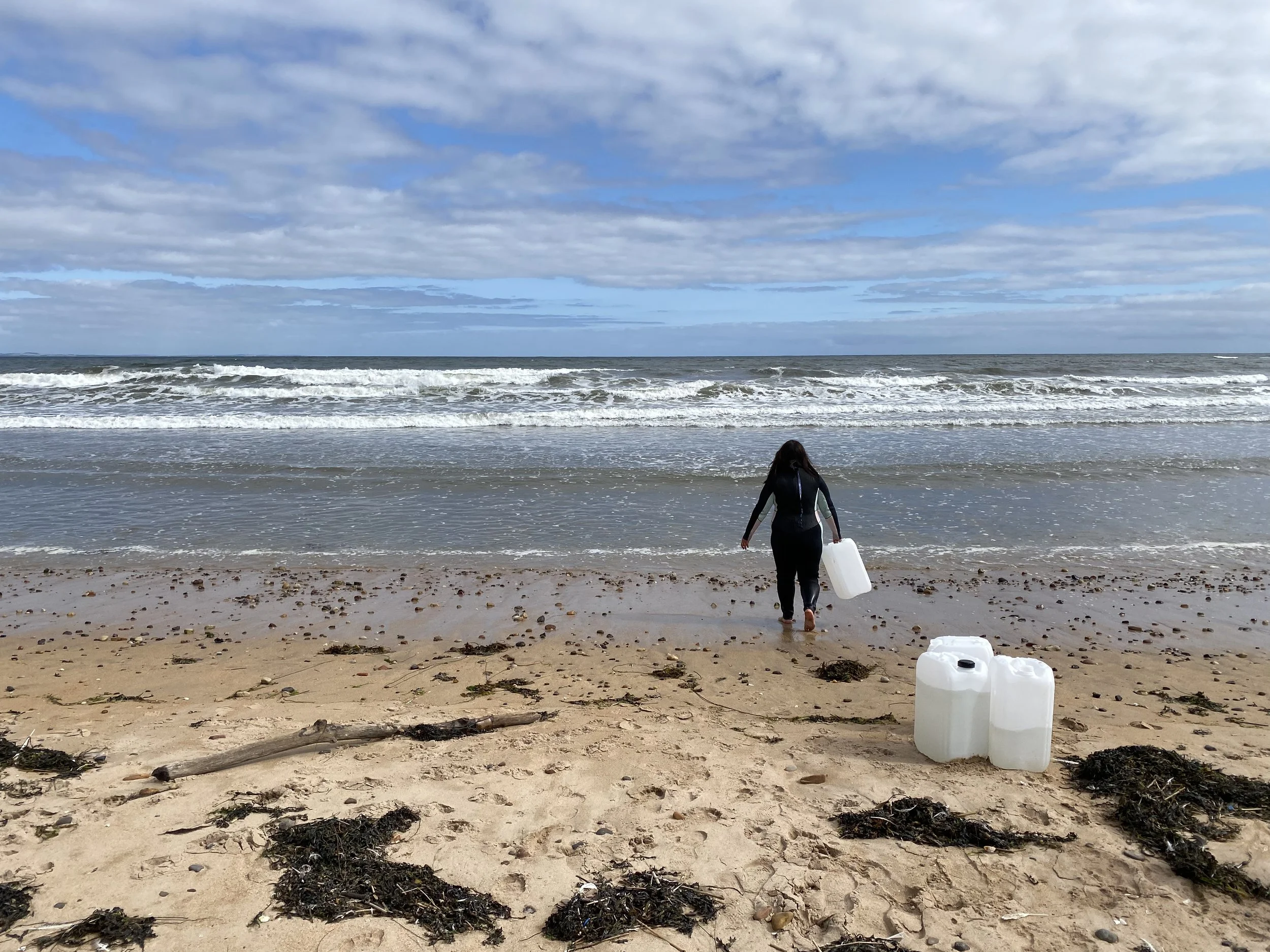
If I’m lucky, the sand will be warm, but if it’s warm, it's also dry, and it will be harder to carry 25 litres of water in each arm.
Perhaps if it's wet, it will be easier, but then again, it means that the tide is falling.
I'd better hurry up!
Salt is something most of us encounter every day—on our food, in the sea, or sprinkled on icy streets, but this humble mineral, known as NaCl or halite–when extracted from mines–carries a rich, complex history. From its role in colonial trade to its symbolic power as a food preservative and commodity, salt has shaped histories, landscapes, and livelihoods across the globe.
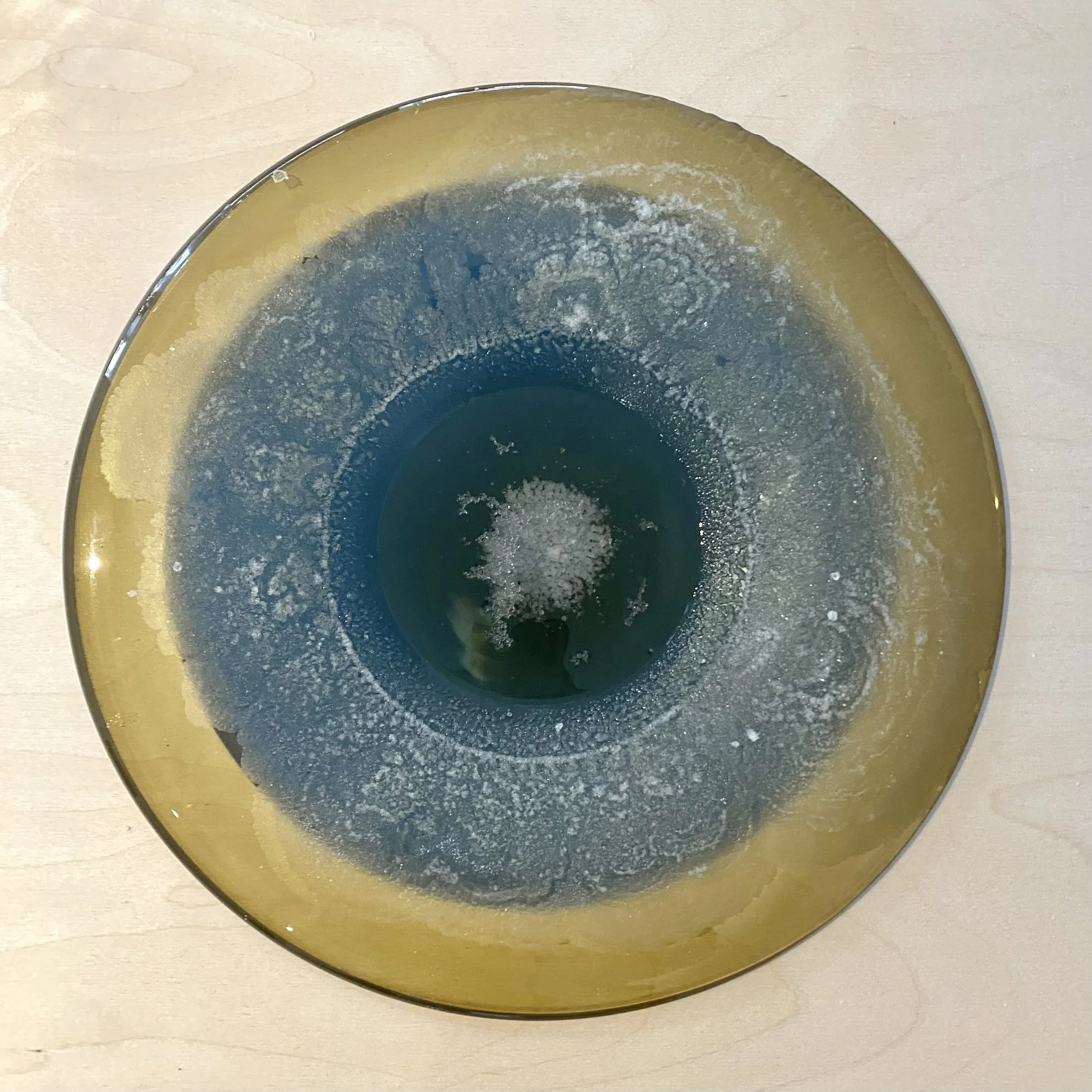
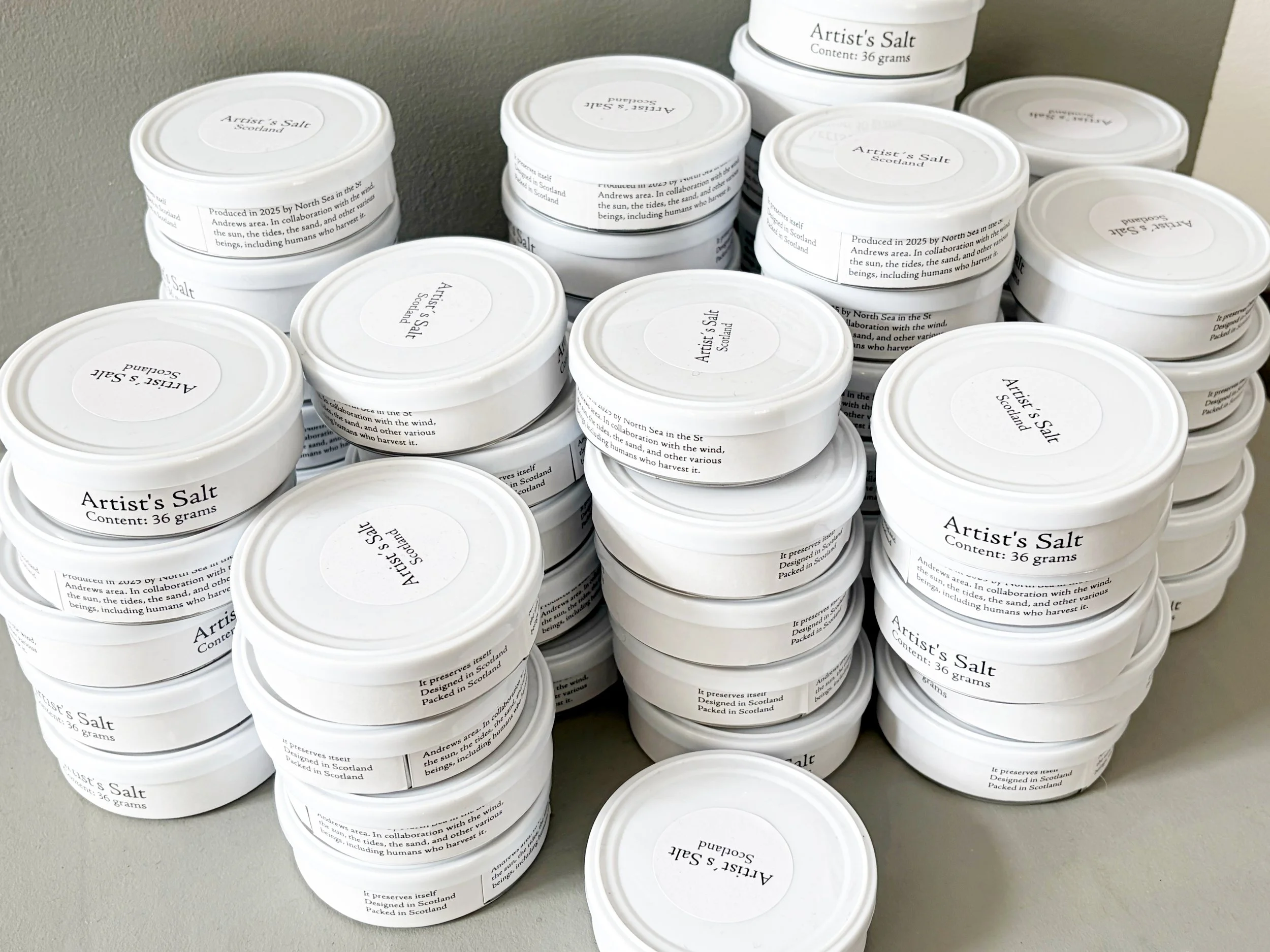
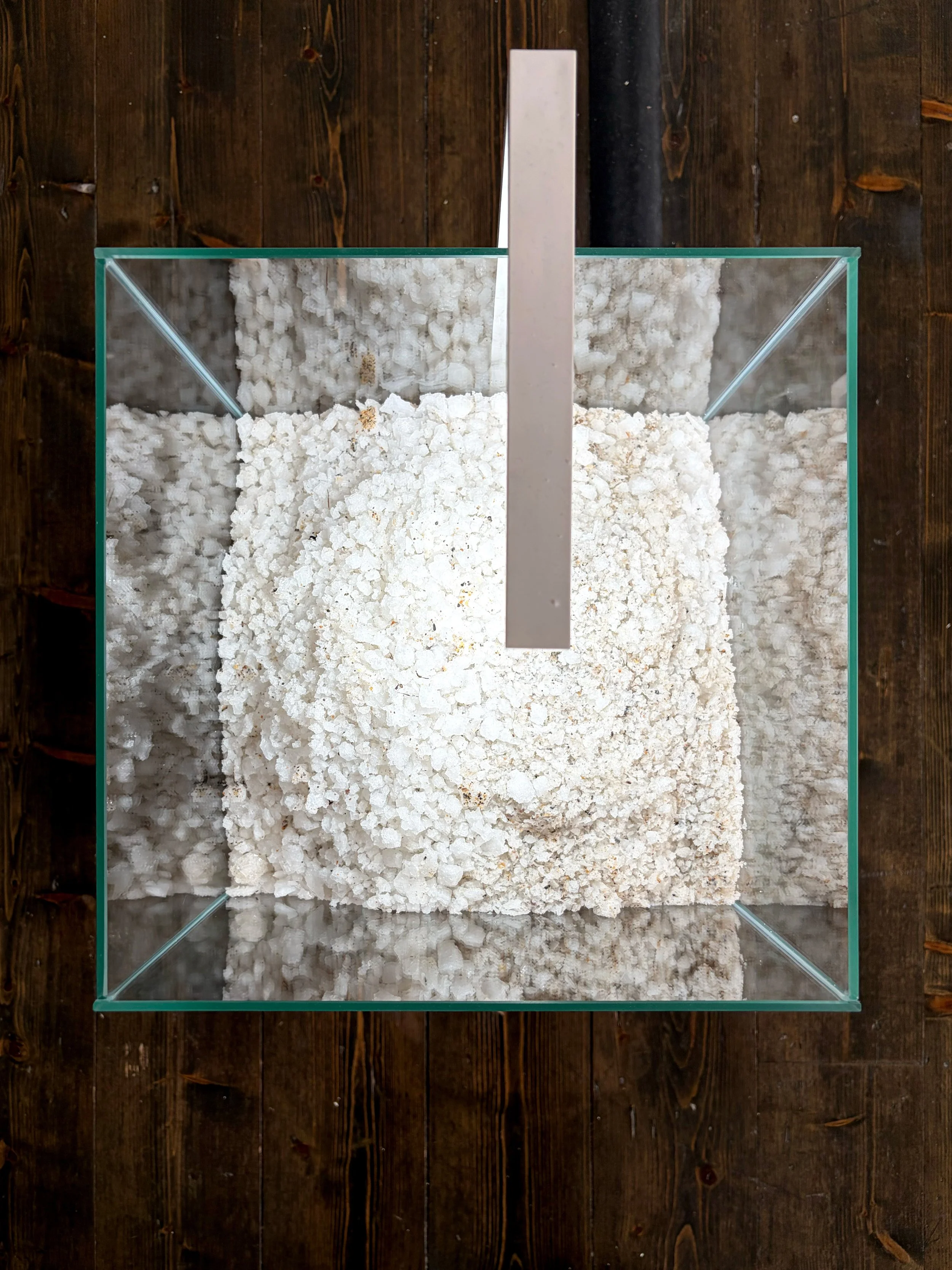
As part of a year of research at Gray's School of Art as the Freelands Studio Fellow 2025–2026, Désirée Coral has investigated the body as a pedagogical medium, artistic material, and a connector to landscape. She collected seawater in St. Andrews and let it evaporate in a greenhouse at St. Andrews Botanic Gardens, harvesting the salt after several weeks and finally bringing it to the city of Aberdeen, thereby replicating pre-industrial models of salt production and distribution in Scotland.
Essays on Salt–The First Harvest explores salt through a decolonial lens, beginning with Aberdeen’s shipbuilding industry, maritime and trade routes, and, most importantly, the long-lasting fishing industry that once connected Aberdeen to global colonial economies.
Essays on Salt-The First Harvest reflect on the potential power of communities, individuals, and relations to body and labour and its power structures.
Essays on Salt - The First Harvest
the worm, Aberdeen, 2026
Curated by Rachel Grant
Image credits by Neil Corall